Six pillars to revive MSMEs


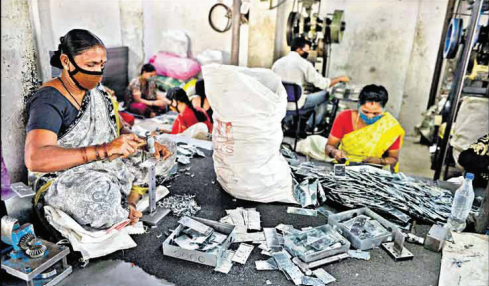
Instead of direct money transfer to migrant workers, which could encourage idling, MSME wage subsidy is way better
In the first part of this article, we proposed a six-pillar framework for revival of the Micro, Small and Medium Enterprises (MSMEs). Here we discuss these pillars in detail.
Liquidity Pillar
There have been many announcements about additional working capital limits, emergency line of credit, equity, subordinate debt, etc, which are very welcome. But these may not flow down to the MSME sector due to three reasons.
First, banks are reluctant to relax the norms and allow credit flow. This will happen only when there is a moratorium on questioning the bank managers’ decision to lend for 12 months at least. They should not be harassed later by enquiries. The credit committees must be supported for their decisions to implement government’s intention. Second, the credit will flow only if there is drawing power, which will happen only after the business revives. So increase in working capital limit without relaxing the margin won’t help. Clean overdraft, thanks to the omnibus bank guarantee, without drawing power will help. The third condition for credit to flow will be profitability of the unit. Banks lend to get back the money. Units that turned unsustainable due to the lockdown will not get the credit until they are made sustainable. This is the correct thing to do because banks are funded by the common people through their deposits.
Reforms Pillar
The government has started this exercise in earnest. The first reform is the redefinition of the MSME based on turnover and investment. Why is there a need for investment limits when there are limits for turnover? Even the turnover limits should have been far higher, at least twice, if the intention is to correct for the loss of money value due to inflation and continuous devaluation of the rupee against the dollar, which has widened the gap between our definition of MSME and the European definition of MSME. Still, this is a good development. The definition should be automatically revised every three years to correct for inflation. The government has to pass the legislation quickly to make this happen.
Second, we need massive reforms in labour laws to differentiate between MSMEs and large enterprises. Labour reforms in the Code of Wages to revise upwards the minimum wages to offset the wage depression due to excess labour supply must be implemented on a war footing. We need massive reforms in Company Law to differentiate in compliance norms between LLP, private limited, public limited and listed companies. The current differentiation is highly inadequate. Third and the most important is compliance rating. The government needs to pass a constitutional amendment to differentiate honest taxpayers and those who comply with regulations from those who cheat. There has to be a compliance rating across all compliances like GST, Income Tax, labour laws, which must be published like ISO quality rating. Those with high rating should be exempted from inspections, raids and harassments until there is contrary evidence and ratings revised. The government must stop making new rules and legislations to prevent fraud but rather spend its full might in identifying and penalising those who commit the fraud.
Labour Pillar
India has a huge population and bulk of these need livelihoods and jobs. They have to migrate in search of work to urban areas. The size of migrant labour – only on account of economic reasons would be between 200 and 300 million. This migrant labour needs dignity. The lockdown has exposed the underbelly of our politics. Universal white card to benefit from the local public distribution system, universal medical benefits, remote election voting, universal education portability for children are some of the urgent reforms we need.
Employers, as well as the government, have all let the migrant labour down and the wounds are deep. In fact, employers should have taken more pro-active and direct steps to talk and negotiate with the migrant labour. It will take 6 to 12 months for the migrants to return but when they return, it will be on better and fairer terms.
Supply Chain Pillar
The broken supply chain will restart quickly if the authorities do not interfere in the manufacturing and supply chain. Material movement has commenced. The lack of labour and liquidity will delay the recovery but the innate desire of the MSME to survive and its work ethic will force every MSME to restart. The government should stop policing them. For example, if Covid positive cases are found among labourers, despite clean manufacturing practices, then holding the entrepreneur and the unit responsible will kill taking risks.
Demand Pillar
Unless demand revives, there is no economy. There are no tax collections. By demand, we mean consumption demand and not intermediate demand. Consumption demand is linked to disposable income, perception of future (or consumer confidence) and liquidity. Today, all three are in peril. Job losses impact all the three for those who lose their job but it impacts consumer confidence even of those who don’t lose their jobs. The Rs 20-lakh stimulus does impact the supply side but not the demand side, which requires real stimulus and grants to the right segment.
The government does not have the money to provide grants and hence demand generation will take some time unless there are factors outside India which will drive liquidity and sentiments. For example, there are huge FDIs into India or the stock market starts booming due to FIIs coming into the stock market.
Sustainability or Profitability Pillar
This is the most important pillar. MSMEs provide the largest number of jobs and put liquidity into the hands of people. A profitable MSME will get funded. The unprofitable ones will go bust if they don’t become profitable. This requires the following urgent interventions:
- Wage subsidy for MSMEs: Direct transfer of money in the hands of the migrant worker is an unproductive payout as it encourages idling. Instead, it is better to make the same payment to an MSME as a wage subsidy. This way, the MSME entrepreneur gets a lower labour cost enabling him to expand his operations. The migrant worker gets the minimum wage, which is three times the direct payout and it is a productive payout. In addition, it makes MSMEs compete for talent with large companies on a level-playing field. This is similar to the 24% PF payment of government for MSMEs with less than 100 employees except that this is for all MSMEs, which employ people and pay them the minimum wages or more with retirement benefits.
- Interest subvention: Net interest rates for MSMEs have to be brought down to 2-3% for global competitiveness.
- Covid Grant: A one-time grant to recover losses due to the lockdown will help hugely in making the units profitable once again.
– Concluded