Questions that must not be ignored


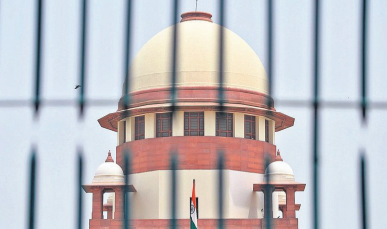
It can’t get more serious than four senior-most judges of Supreme Court publicly pointing to the survival of our democracy.
January 12, 2018, will go down as a historic day for Indian judiciary and Indian democracy. The four senior-most judges said many things and left many things unsaid. Their statements need to be read and understood in totality. I have six key observations on the matter and let me raise them because, as the judges said, “it is a matter pertaining to democracy and hence it is of public interest.”
1. Did these four judges err in going public?
Many have argued ‘yes’. But I believe that they have not erred. Let’s just imagine that these four judges were asked to decide on an important constitutional issue and all of them unanimously gave a judgement. Would we question their judgement? No. Because all of them have impeccable integrity, they are the senior-most and have applied their mind. Then, why are we questioning their judgement of going public?
To me, when four senior-most judges of high integrity, one of whom is scheduled to be the next CJI, makes a judgment call to go public, I defer to their collective view. Instead of questioning their decision, we should probe what forced them to take this desperate step.
2. Why did they take this extreme step?
Many of us have said that this is unprecedented, unexpected and unwarranted. But don’t these judges know what judicial impropriety is? Are we wiser than these four judges – remember, not one disgruntled judge but four judges of sagacity – believed it is a right step. Of course, they do know better and they also said that they are very much aware of the risk of going public. So why did they do it – risking retaliation by the CJI, executive, legal community and media?
In my mind, the answer lies in what happened between the CJI and these four judges when they met on the same morning. Imagine that you are the editor of a newspaper. In the morning, four senior-most journalists, who are highly respected, come to your office and point out that your editorial policy is biased and can impact the integrity of the publication. What would you do? Will you not recognise that it is a serious issue and promise to take corrective action and assuage their feelings? But if you argue against them, then there can be only two reasons — either you are defensive because they are telling the truth or because you believe that your opinion is more important that the collective wisdom of the four. If you take the stand that you are the chief editor and claim that it is your right to overrule, what would your top journalists think? What conclusion would they reach? What action would they take? All these judges came to the same conclusion.
All these judges came to the same conclusion — when you are only the first among the equals, and when four equals tell you something is wrong and you deny it — that what they feared may be true.
3) Is this just an administrative matter?
Absolutely no. If it was so, why did Justice Chalameshwar use the words to the effect that democracy is in peril and that if they keep quiet, it will be akin to selling their souls? These are big words. Do remember that judges write judgements every day and words communicate their judgement. Every word in a judgement is interpreted. So, the judge, being the senior-most, is aware of the meaning. More importantly, does it mean someone is selling his soul? If the answer is yes, we have a very huge issue on hand.
4. Is assignment of cases linked to judicial independence and integrity?
Let’s understand the deep implications of selective case assignment. First, the CJI has some interest in the case and wants some outcome. Second, the judges to whom it should have been assigned in the normal course, in the opinion of CJI, are either prejudiced or based on facts, are likely to give a judgement against the outcome the CJI wants. Third, and this is the most serious issue, is the judges to whom the cases are being assigned are malleable and can give favourable judgments. Are the four judges pointing their fingers at the CJI or are they pointing at the judges to whom the cases are selectively assigned by the CJI? The implications are ominous to say the least.
5. Is the CJI interested in a particular outcome?
We go to court to seek justice hoping that our version of the case will be heard in an unbiased manner and the judge does not have any preconceived notion nor is prejudiced in favour of an outcome. This hope is the foundation of any judicial institution. Is there anyone who is putting pressure on the CJI? Is the Executive behind this? If the Executive is behind it, how can they put pressure on the CJI who is independent of the Executive?
6. Is there any political conspiracy?
My God. The D Raja story is in bad taste, it should not have been aired. Can you imagine that a politically defunct CPI can influence four senior-most judges to defame the CJI? The insinuation made in the story must be condemned.
Let’s hope and pray
The first serious outcome of last Friday’s disclosure is the fracture of the five-member collegium, now divided one to four. How will the judicial appointments happen now? How will the CJI and the four judges work together hereafter?
All these questions are far more serious than the issue of administrative overreach by the CJI and I pray that the advice of senior advocates like Soli Sorabjee to put these matters under the carpet is ignored.
I also fervently hope that all the above uncomfortable questions are misplaced and there are simple answers to what happened — either it is an ego tussle between the CJI and the four judges or the CJI made an error of judgement on the seriousness with which the four judges perceived his actions. We pray that all five of them will have the sagacity to sit down, arrive at an acceptable conclusion and issue a clarification that answers these questions. Any superficial clarification will only reinforce the public opinion that ‘all is not well’ with our judicial system. It will completely negate the extraordinary decision of these four judges to go public.
In fact, in other systems, like in the BCCI case, the Supreme Court insisted on a complete overhaul of the system. Now, we have a strong case for a complete overhaul of the judicial system of appointment of judges, allocation of cases, review of judgements, court budgets, fast-track court and case pendency. The best outcome would be if this incident triggers the appointment of a judicial commission to judge the judges and usher in major reforms.