Avoidable row on New Wages Bill


It doesn’t prescribe a National Floor Wage of Rs 18,000 per month that is fuelling the controversy
Do you know that your barbers, workers of your club, etc, must be paid a salary above the minimum wages (MW)? If you are an employer and if you don’t comply with this New Code on Wages (CoW) Bill, you can face prosecution. Read on about a new Bill that can affect us all –– as employee, employer or customer.
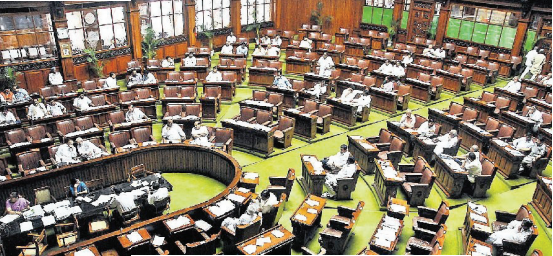
On August 10, 2017, Minister of State for Labour Bandaru Dattatreya introduced a historic Bill — CoW Bill 2017 in the Lok Sabha. The Bill consolidates the Minimum Wages Act 1948, Payment of Wages Act 1936, Payment of Bonus Act 1965, and Equal Remuneration Act 1976, into a single statute.
Unnecessary Frenzy
The Bill has created a media frenzy by claiming that it will set a new single National Floor Wage (NFW) of Rs 18,000 per month (or Rs 693 per day). This would mean almost doubling the current MW. Employers believe this will prevent market forces from determining wages, impacting competitiveness and survival, especially for MSMEs. However, the government is yet to determine the actual amount.
Understanding MW and NFW
The MW is a global practice to prevent exploitation of labour. In India, the concept was first introduced through the Minimum Wages Act 1948. Later, in 1988, the Variable Dearness Allowance (VDA) was added to address inflation. Thus, minimum wage consists of a basic rate and a special allowance (VDA).
Determining the Wage Levels
- Living Wage: The level of income for a worker and a family of four that ensures a basic standard of living (health, comfort, education).
- Fair Wage: A wage level that maintains employment while seeking to increase it, keeping the industry’s capacity to pay in perspective.
- Minimum Wage: Usually situated between the Fair wage and the Living wage.
The Two-Stage Process
First, the Union Labour Ministry stipulates draft MW for sectors like agriculture. In the second stage, each State’s labour department translates these floor level wages into a minimum wage for specific industries and geographical zones. The real challenge has been both in the determination and extrapolation of the MW at the State level and its poor implementation.
No Truth in Rs 18,000
Examination of the draft Bill confirms there is no basis for the alarmist stories regarding a single Rs 18,000 NFW. Clause 9(1) explicitly states that different national minimum wages may be fixed for different States or geographical areas. Furthermore, Clause 9(3) mandates that the Central government obtain advice from the Central Advisory Board—which includes 15 employer representatives—before fixing the wage. This Board has yet to submit its recommendations.
Current NFW Context
The national MW for agricultural labour was revised to Rs 176 per day from June 1, 2017 (for the central sphere). However, these floor wages have been non-statutory and advisory, meaning they are not binding on State governments. This is a root cause for the current state of affairs.
What is new in CoW?
- Universal Applicability: The restriction to a notified list of industries is removed. Every employee is covered except Apprentices and Armed Forces.
- Removal of Salary Caps: Previously, employees earning over Rs 18,000 were not covered. This restriction is being removed.
- Statutory Power: The Act will have the teeth to align State MW to central stipulations and enforce implementation.
(The author is Chairman, TMI Group, and Independent Journalist)