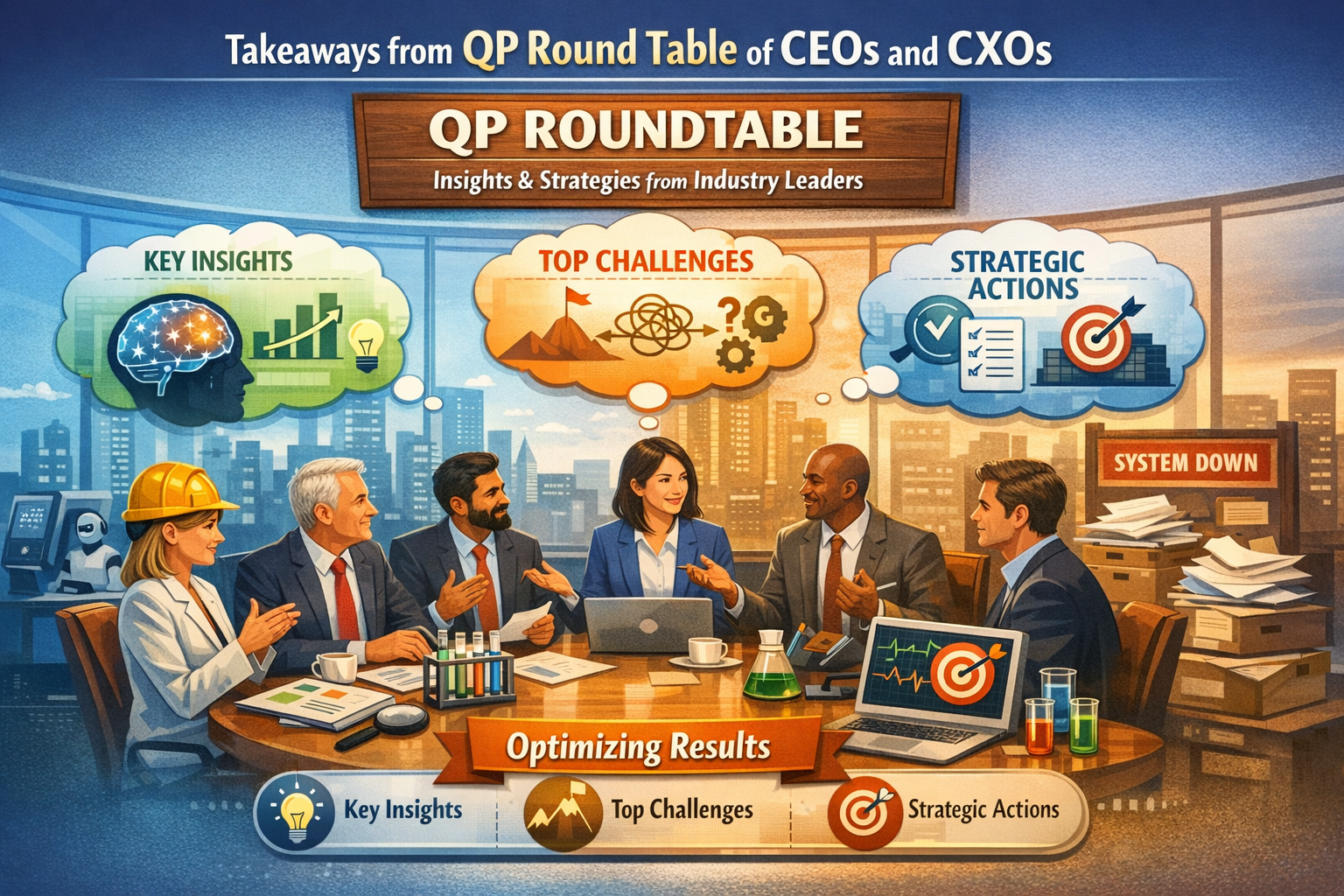
Take aways from QP round table of CEOs and CXOs

19 Hard Truths About Frontline Attrition, Productivity, and How to Fix It
1. It is time boards take ownership of frontline attrition and productivity.
2. Frontline in the first 12 months must be treated separately from the rest of the frontline.
2. Frontline in the first 12 months must be treated separately from the rest of the frontline.
- 3. Compensation is stagnant in frontline for over 2 decades. Frontline live hand to mouth every month and are unable to survive without borrowing and this is one of the reasons for infant attrition.
- 4. Compensation cannot be increased unless productivity is increased – by increasing the productivity of the bottom 50%.
- 5. Hence, low productivity is the root cause of low compensation and high infant attrition.
- 6. Infant attrition due to non-performance impacts psychologically the youth and infant attrition has reached astronomical heights at the industry level and is now a national youth issue.
- 7. Already regulators like RBI have flagged the attrition in banks but what RBI must flag also is its root cause – the low productivity of the bottom 50%.
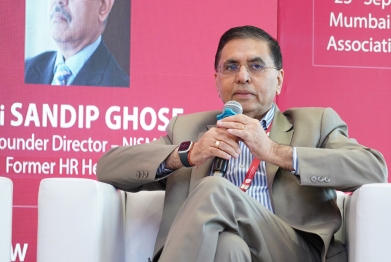
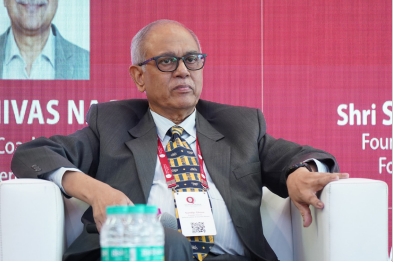
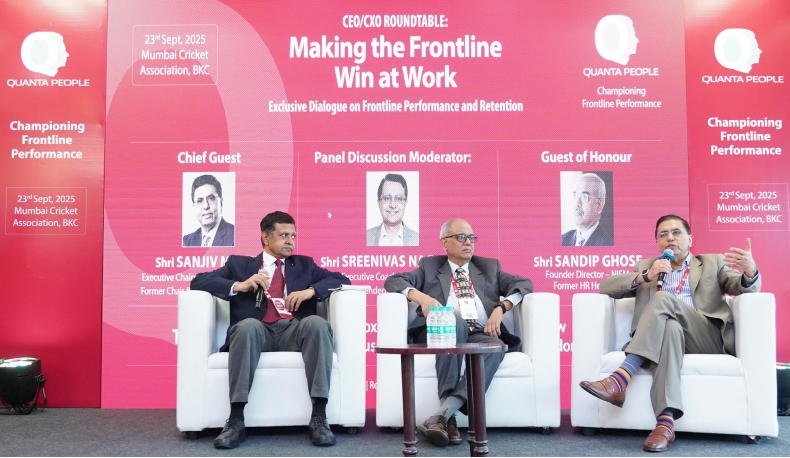
- 8. It is time CEOs take ownership of frontline because they are the lifeline. Sanjiv Mehta shared his experience in Bangladesh and how he completely transformed his workmen union from militancy to partner in progress during his leadership.
- 9. It is time company CEOs and boards take ownership of not only direct employees but also indirect employees in staffing and third-party roles. Sanjiv Mehta mentioned his HUL case study when company HR team took accountability of employees in third party roles by paying their salaries directly and tracked their training which dramatically changed the channel performance.
- 10. Sanjiv Mehta said companies must move on from minimum wages to living wages. Sanjiv Mehta talked about 6-8-10 policy which worked for HUL. If an employee deserves Rs. 6 you pay him Rs. 8 and extract Rs. 10 output. This was the reason responsible for extra ordinary productivity of the frontline in HUL. He said many companies are doing the reverse viz 10-8-6 policy i.e. if a person deserves 10, pay him 8 and extract value of 6.
- 11. To adopt the 6-8-10 policy we need a totally new approach to frontline. We must hire the right people, and train them extensively, we must show them career pathways and thus make them win on the job.
- 12. Frontline performance management has failed miserably in companies. How do we know this? Today top 10% are performing 10X or more times better than the bottom 10% In just 12 months. All joined at the same time, hired and inducted the same way, work in same market and operating conditions. The huge performance dispersion is a good indicator of poor performance of the performance management system (PMS) of new entrants to the role. This must change urgently.
- 13. One example is role induction – Sandip Ghose talked about RBI philosophy of training extensively and how it paid dividends. He also talked about his positive experience at NISM which managed to produce students as per industry requirements. Role induction training cannot be compromised and minimised.
- 14. A new approach to frontline management could be to assess and reward frontline not for productivity but for potential.
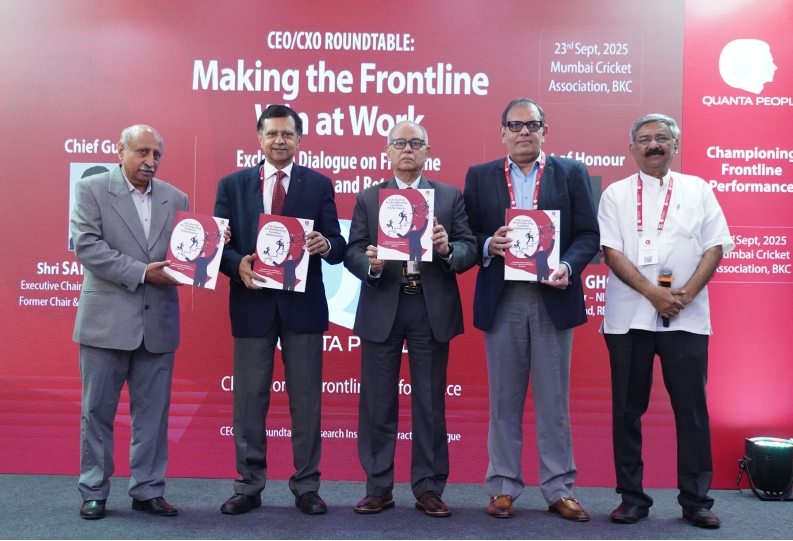
- 15. Prof. Raghu from ISB who signed an LoI for partnership with QP said his research showed that the current incentive and contest models require urgent review because they only reward very few top performers. Rest is demotivated and contests achieve the opposite effect. Employee segmentation helps in designing better contests and significantly improving performance.
- 16. QP research found that Gen Z in frontline want to win and once they crossed a threshold of 50% of performance, they start to believe that they are winning on the job and decide to stay. Attrition of employee who crossed 50% of target dropped dramatically multi-fold.
- 17. QP research found that Simpson paradox operates on frontline data and the only way to overcome it is to drill down on performance and retention data of each individual using the TMI Plot. This helps segment employees into 9 segments and customise the HR interventions for each segment.
- 18. QP research found that employee settle down into performance orbits. Top performers take off and stay at the top. Bottom settle down and stay at the bottom. This clearly makes a case for STEP UP model of performance pathways.
- 19. For the first time QP has created 7 new metrics to measure the effectiveness of the frontline management done by companies. Each of these metrics must be calculated, reported and monitored at the board level and must improve quickly. They are:
- Metric 1: cost of underperformance. Currently it is at 40% of HR budgets on frontline and extremely high.
- Metric 2: Productivity of the bottom 30% of the cohort at the end of 12, months: this is currently less than 30%
- Metric 3: Infant attrition at the end of 6 months of vintage: this is currently at 60% and must be calculated and reported at the board level
- Metric 4: Performance multiple between the top 10 % and the bottom 10% of employees with 12 months of vintage is more than 10 and it must be reported.
- Metric 5: % and number of employees in dream segment (performers who stay and perform) and horror segment (non-performers who survive).
- Metric 6: cost of wrong hire. Currently it is around 4 months of salary and 4 x of the cost of hire.
- Metric 7: infant attrition or % of people hired who left in the first six months.
Solutions
- 1. Listen to your own frontline data an d shy away from old hypotheses and rehashing old practices. Identify your current blind spots. QP has developed an advanced frontline performance Analytics platform (LENSE) which can help identify blind spots and derive powerful insights on target setting, compensation, incentives, supervision, performance and attrition using multi variate analytics and deep dive models.
- 2. Adopt 50 X 6 as the goal for performance management system all new entrants in frontline i.e. enable every new entrant to cross 50% of cumulative target in the first six months. This will reduce infant attrition, increase productivity, and allow for increase in compensation.
- 3. Adopt the 6-8-10 compensation and productivity policy for frontline.
- 4. Adopt and monitor the seven new metrics, at board level, to measure performance management of new entrants in frontline roles
- 5. Performance management must shift from outcome or inputs to daily Outputs on Lead Indicators of Performance (LIP). QP has developed the model to scientifically identify the LIP and has developed a very simple App to help frontline improve their LIP performance. Since LIP have a causative relationship with outcomes, outcomes improve automatically when LIP increases. This is the first of its kind in the world.
- 6. QP App has an in-built AI based platform to motivate employees to learn and implement the Secrets of Success (SoS) of high performers, every day.
- 7. QP is India’s first consulting plus analytics plus technology solutions company. Call QP for a detailed presentation and help you develop a road map to solve the frontline attrition and product unit problem.
Downloads
- 1. Coe linkedin: http://bit.ly/4gLpJYX
- 2. Video: http://bit.ly/4nWCna5
- 3. Research findings: https://bit.ly/4pHVzd7
Please connect with:
Akshita Jaikumar
akshitajaikumar@quantapeople.com
+91 7032642609
Srinath Santhanam
srinaths@quantapeople.com
+91 8939836636
…for a presentation.