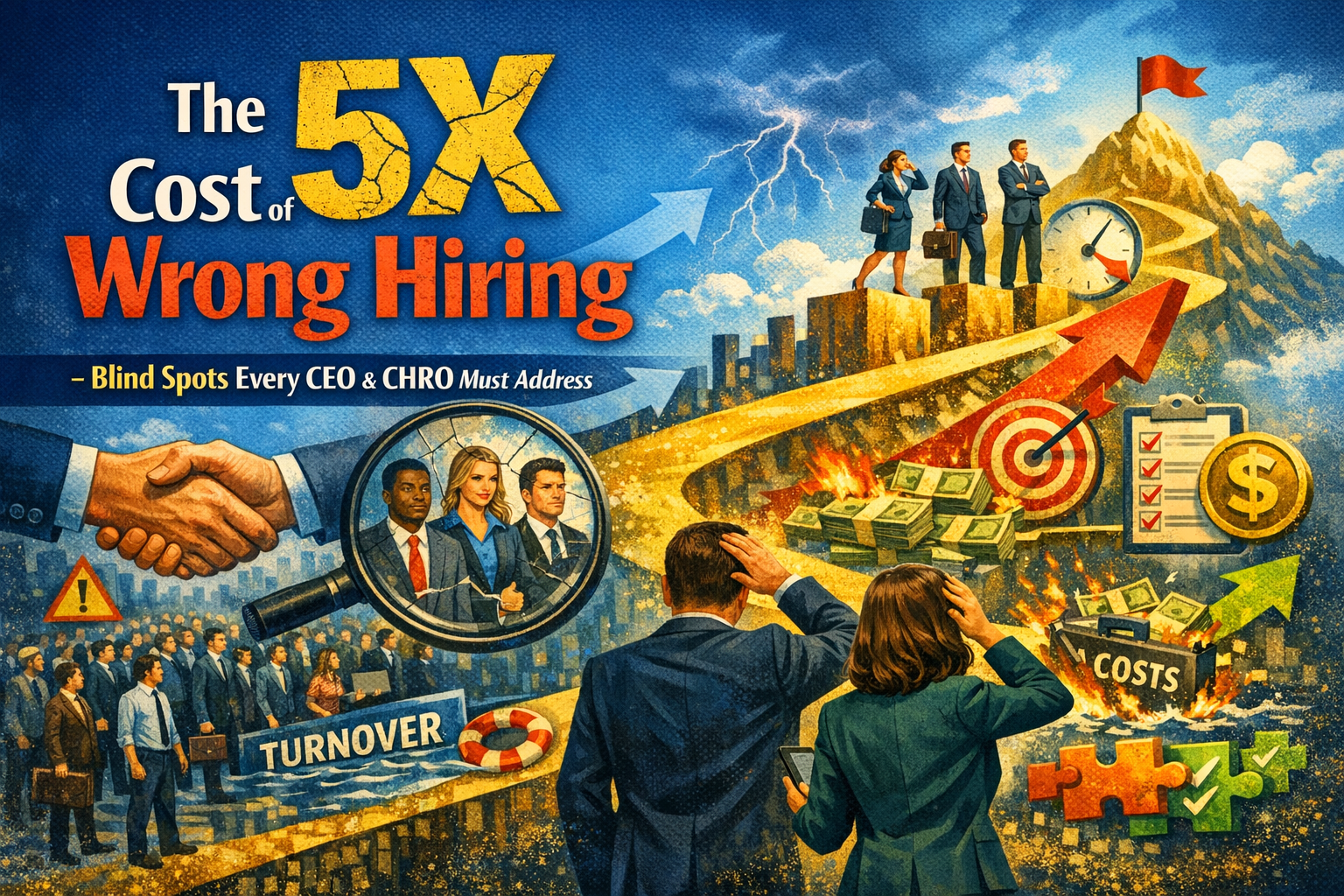
The 5X Cost of Wrong Hiring: Blind Spots Every CEO & CHRO Must Address

Low Quality Hiring is Costing You Millions – Here’s How.
Shift from ‘cost per hire’ to ‘Cost per right hire.’
“Buying the cheapest fire alarm to save ₹200 – only to lose ₹2 crore in a fire – isn’t cost-saving, it’s cost-suicide.”
Frontline performance starts with hiring right. This is what poor recruiting does to your organization – slows you down, costs you heavily, and leaves you scrambling to recover.
Procurement and HR departments are often tasked to minimize cost per hire. Reducing hiring costs blindly leads to higher wrong hires, skyrocketing attrition, poor performance, and eventually higher operational costs.
The consequences of poor recruiting are well-known but shockingly under-appreciated:
- 1. High Infant Attrition: Nearly 70% of employees who quit within the first year, leave within the first six months.
- 2. Zero Performance Hires: 15% of new hires don’t make a single sale or hit their primary KPI in the first six months – yet, the company pays their salary in full.
- 3. Productivity Chasm: After 12 months, the bottom 10% performers deliver results that are 10X lower than the top 10%, wasting up to 40% of the HR budget on under-performances.
The Top 5 Blind Spots in Recruiting
1. Failure to calculate the Cost of a Wrong Hire
A wrong hire is an under-performer who quits, or forced to quit, and bulk of the salaries paid till the exit are wasted. Most organizations calculate replacement cost superficially – cost of sourcing, onboarding, or induction. But what they miss is the massive hidden cost: Cost of underperformance of the associate who exited. According to research of Quanta People’s Centre of Excellence (CoE), the cost of a wrong hire is conservatively estimated at 5X the cost of hiring in BFSI frontline roles in India.
2. Underutilizing the Power of Recruitment Analytics
Many companies rely on instinct, outdated job descriptions, or conduct basic assessments. What’s missed is data-backed profiling. New Recruitment analytics can now reveal insights on demographics of the employees who Stay and Perform in your system. By analysing the performance of thousands of past hires, companies can now predict which candidate profiles are likely to deliver consistent performance over 12 months and who is at risk of early attrition. Smart hiring today means replacing gut feeling with evidence.
3. Feeding AI Models with Wrong Data
AI-driven hiring sounds like the silver bullet but it only helps in predicting employees who will get hired but, it cannot predict who will stay and perform. It will only amplifies your past mistakes. We need new AI models which predict based on job performance and residency data.
4. Undercutting Recruitment Process Integrity
Quick fixes – Excessive referrals, skipping critical evaluation steps, or pressurizing recruiters to fill quotas fast – often backfire. We need robust, reliable recruitment process with clear accountability for post-hire outcomes – not just fulfilment.
5. Assuming the Candidate Is Making an Informed Choice
Recruitment isn’t one-sided. It’s a two-way decision – the employer evaluates the candidate, and the candidate chooses the job. The reality? Most candidates aren’t aware of the actual job challenges, pressures, or culture. This leads to poor fit and early exits. A job change isn’t like buying a shirt. Employees invest years of their life, not just money. Great hiring ensures the candidate is making an informed choice, not just a hopeful leap.
How to Calculate Cost of a Wrong Hire (Step-by-Step)
- 1. Determine average tenure of hires in the last 24 months.
- 2. Calculate cumulative average performance of those hires during their tenure.
- 3. Categorize hires:
- Achievers: Those who perform above performance norms
- Underperformers: Those perform below the norm
- 4. Calculate under-performance (cumulative performance gap against norm) of underperformers till the end of the tenure.
- 5. Calculate the cost of under-performance: Assume fixed salary is paid to achieve a performance norm – calculate the wasted salary on under-performances.
- 6. Calculate backfill cost: Hiring + Onboarding + Induction ~1 months salary.
- 7. True Cost of Wrong Hire is the sum total of cost of under-performance and backfill cost.
Final Thought
The hiring is not a stand alone activity. It is the key step in the talent supply chain. Every wrong hire is not just an operational hiccup – it’s a hole in your revenue engine. Organizations that stop treating hiring as a cost center and start seeing it as a strategic activity which brings in talent which stays and performs.
For free consulting, please contact:
Archana Samtaney
Centre of Excellence on Frontline Workforce Performance
archanasamtaney@tminetwork.com
+91 9989714500 today