
Managing Indian Talent – The Top Eight HR Issues
After interviewing and counseling 20,000 professionals- engineers, MBAs and CAs- clearly labeled as Talent by the Indian corporate sector- and having interacted and debated with over 200 HR honchos and CEOs, I have reached only one conclusion. Talent Management (TM hereafter) in India is still an idea, a desirable one, yet in its infancy.
Several reasons can be cited. By far the biggest challenge has been the ‘HR mindset’ vis-à-vis talent, a legacy of the past 50 years. In this article I propose to raise a few questions and issues for which we need to find answers and suggest approaches before we can move onto the next stage in the TM practice.
UNDERSTANDING THE TALENT TRENDS
Before we discuss my understanding of TM, it is essential to recognize the four important trends in people management, which have made talent management very critical to the success of many organizations.
- Trend 1 – Globalization of business and people management: Currently we are talking to one of India’s largest IT firm to develop an e-learning program to solve a modern day problem how to make Indian bosses work with foreign subordinates. This scenario would not be any where in the training calendar of Indian companies 5 years ago.
- Trend 2 – Global demand for Indian Talent: We are engaged with one of the world’s largest steel producers to hire campus talent from across the globe and the Indian piece has never been more important. Every year the entire top management of the company from across the globe descends on the IIMs. So is the case with IITs where the employer’s profile has changed so much that many of the Alumni like me wish they were born twenty years later.
- Trend 3 – Compensation explosion: Since 1995, campus compensation has gone over the roof. Even assuming a fresher compensation for India deployment of Rs.1 million per year, we are looking at a 1000% growth, which has not been matched with the growth of the quality of the output. No stretch of imagination can help you to believe that the productivity of a fresher from IIM has gone up 10 times in the last 10 years. This means that companies are forced to pay these salaries due to competitive pressures. And the onus has shifted to the corporates to earn it back with a better talent management.
- Trend 4 – Pedigree based hiring at the entry level: Corporates have abdicated their responsibilities for fresher assessment at the campus because it is they who are being assessed. Every one hits the same campuses knowing very well that the reservation of seats at the engineering and MBA level has pushed many talented people to the recent, private colleges without any pedigree. This has created a perception of shortage of talent. The MD-HR of one of the Europe’s largest banks told me that this trend is forcing many European Corporates to look else where-say Eastern Europe. This has killed the age-old wisdom of “Hiring for Attitude and Training for Skills”, even at the entry level.
Lets us move on to the eight select HR issues which I believe need attention.
Issue 1: Who or what is Talent?
The segmentation of management professionals in any organization into four segments based on loyalty and performance is age old.
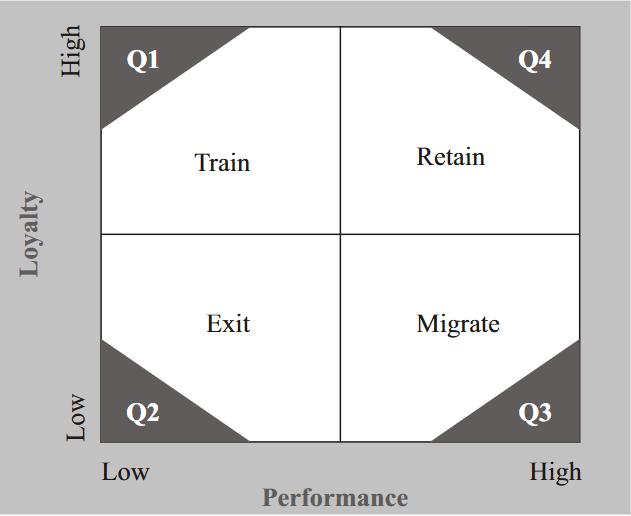
In this segmentation, the challenge has to be prioritized between Quadrant Q1 and Q3. Many of the Indian organization still implicitly believe (and that reflects in the HR policies) that Q1 is more important than Q3. This is a fundamental contradiction to the principles of talent management. To me, talent definition starts from this contradiction.
Talent, to me, puts profession and self above the organization. Hence, organizations have to earn the loyalty and not the other way around. Organizations have to publicly state that Q3 is far more important than Q1 and practice this philosophy.
Talent recognition must move away from pedigree to performance. IIT or IIM or XLRI qualification can give only a head start at the beginning of career, but not forever. Talent recognition also presumes talent de-recognition and we will discuss more about this later in this essay.
Issue 2: Disowning two basic HR philosophies
Two age old philosophies in HR are supposed to be steeped in history. They are the principles of “Equality and Precedence”. The MNC corporate I used to work for in Mumbai in 1984, used to give housing loans of Rs. 60,000 (after 3 years of service), for a house in Mumbai, when it was difficult to buy a lamp post with that money. All my batch mates in Citi Bank used to get Rs. 8 lakh in housing loans interest free. My boss was reprimanded for suggesting that the management trainees be treated differently because housing is a common problem for all employees and MTs cannot be differentiated.
Similar is the omnibus principle “We have not done this before”. Today HR has to discard these principles, totally and publicly, because the first two principles of talent management are differentiation between talent Vs. non talent, and differentiation between the past and the present.
Issue 3: Talent recognition is not permanent
I have strong views on defining some one as “Talent for life”. Talent has to prove itself every three years by outperforming the non-talent with a sustained performance for that three year period in any area, which impacts the business results. So areas such as corporate governance, environment management and corporate legal issues deserve to have talent working in them as much as in business management and in operations.
In my books, talent is not worth much if it does not multiply and spread it around. Talent must be evaluated for nurturing and also upgrading non-talent to talent, in any role that they do. The bigger challenge is to provide equal opportunity for non-talent especially those inducted into the organization since the last review. This means that the talent identification and management processes must be transparent and open and HR must be willing to take the risks associated with down grading talent and upgrading non-talent.
Issue 4: Hiring talent
“Hiring the best available” is the nemesis of talent acquisition. Cost of hiring talent is far more than hiring non-talent and recruitment advertising is essential to reach out. So separate budgets for talent acquisition may be required.
As a leading talent acquisition consultant, we are often asked to source talent from other companies and I always say it is impossible to do so. There are three reasons. Firstly the companies have an “outdated” fitment rule when it comes to compensation and position. The rule is that of batch comparisons and IIM / XLRI grads from the same batch from inside the organization should not lose out compared to the new inductee. Notice the comparison is between outside talent and inside uncategorized talent. Many deals are lost at compensation stage because of this erroneous comparison.
The second issue is culture. Talent in one context cannot automatically be presumed to be talent in another. The third issue is assessment of talent during the hiring process. The hiring process in most Indian corporates is so subjective that most or all candidates may get rejected. How does one recognize talent early in the hiring process so that we have a separate process and fitment guidelines for them is a big question.
The second aspect of talent acquisition is the need for periodic recognition of internal talent. Many corporates tend to undervalue internal talent because of the inherent assumption that the ‘known devil is worse than the unknown angel’ which is exactly the opposite of popular wisdom.
Issue 5: Engaging Talent
Talent engagement in specialist positions brings out the best in them. Stock and commodity training system analysis or corporate planning are some of the ideal jobs for talent. However, deploying talent in positions that require substantial amount of management skills can be tricky because talent prefers to work alone or require a super talent as a boss.
A few simple guidelines for engaging talent are:
- Allow the talent to link up with top management and boss’s boss.
- Attach an Operation Manager as a deputy. Insist on frequent performance review, since talent tends to go “off tangent” in intellectual pursuit.
- Always counsel with data and on competency mismatches.
- Continuously initiate across multiple roles as long as it is challenging.
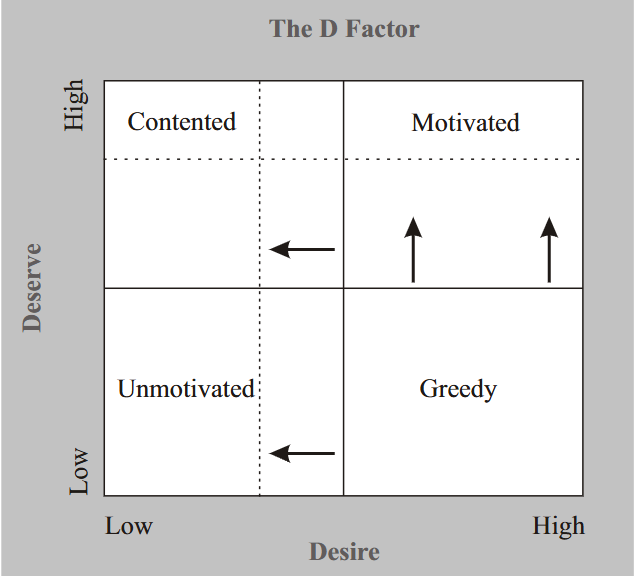
- Understand the ‘D’ factor propounded by Ganesh Chella, Totus Consulting, Chennai. The ‘D’ factor focuses on the desire Vs. deserve grid. Talent is high on desire and hence it is important to migrate them from “the greedy” quadrant to the “motivated” quadrant.
Issue 6: Talent Vs Talent
Most often, talent tends to compare with itself and the issue of differentiation can be taken to its logical end talent of ONE i.e. myself. So the problems of comparison between talent Vs. non talent is only the beginning. We discussed the three-year re-certification principle earlier, which can be a solution as well as a problem. Down grading is not acceptable to “past talent”, forcing them to leave.
Competition between talents can be managed only through equal opportunity and transparency in the assessment. I asked the Sr. VP Human Resources of Essar Petroleum Mr. Mohan Kumar about – “What motivates talent?” and he listed “access to the CEO and top management” as one the key perks that talent expects, in addition to compensation, plum postings etc. This puts a big responsibility on the top management to continually engage and communicate with the talent without playing favorites.
Issue 7: Who should manage Talent
The talent manager’s role must be a post to be vied for and all talent must be made to aspire for it. Talent does not tolerate non-talent as a boss or in TM positions. HR managers holding talent management positions have to prove twice as hard as business and operations professionals because talent does not confer talent tags to people in staff position easily. In my opinion TM positions should be held by proven talent, in rotation.
Issue 8: Exiting Talent
The most difficult job is to accept that talent finds some other organization more appealing than yours, despite you making a great effort and it hurts in many ways. All those in non-talent category will give the “I told you so” look and the debate of loyalty Vs. performance will begin all over again. The exit interviews of talent are normally very bitter and the management makes it difficult for the talent to leave on time and with dignity.
My view on this is very simple. Talent will and should move on So that other talent can flourish. But the talent has the responsibility of giving proper notice (talent should have an extended notice period than non-talent) and should have stayed for a minimum mandatory period in the organization to prove and deliver value. If these conditions are met, then the exit should be celebrated so that it inspires those staying back.